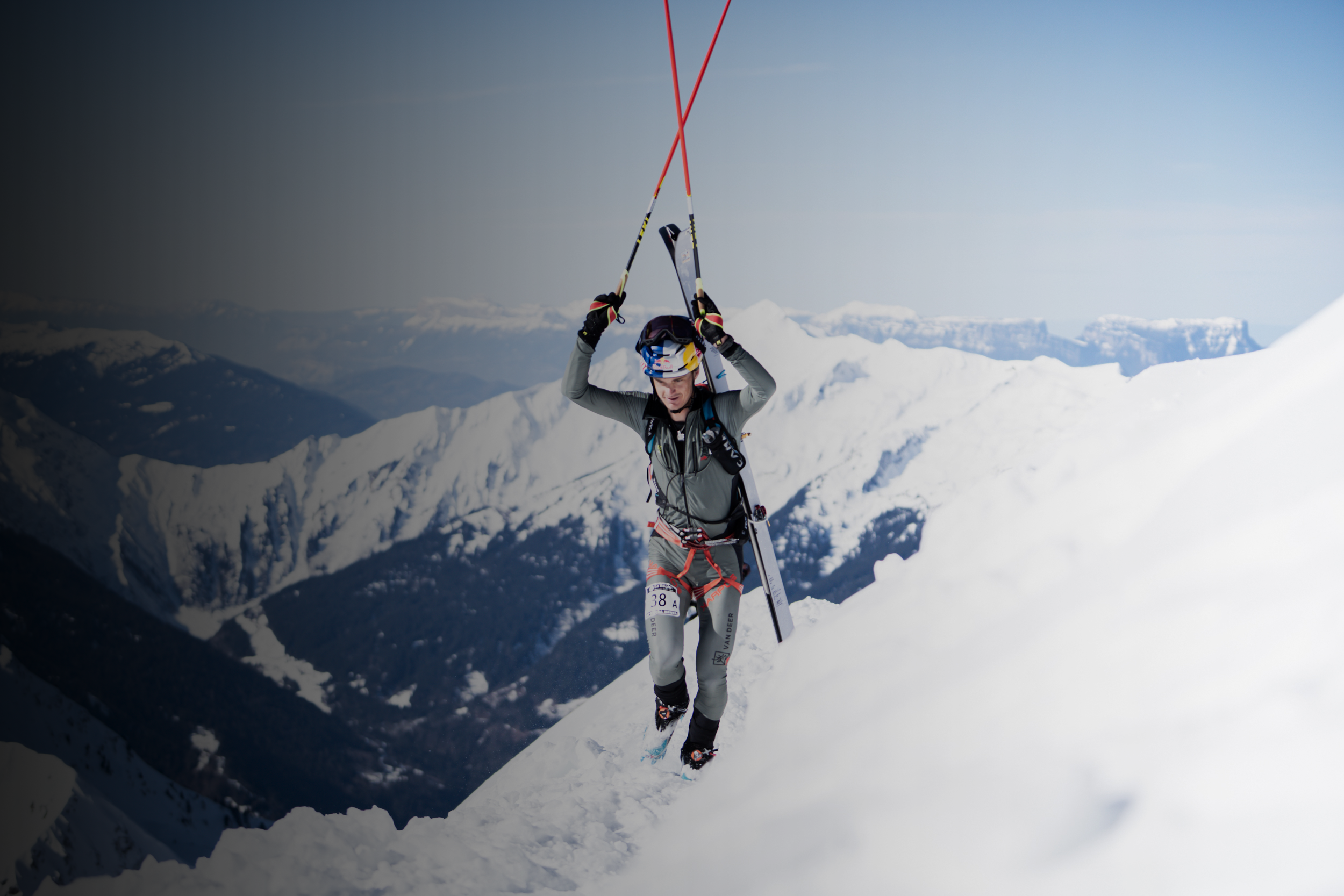
TONI PALZER: STEADY IN THE SADDLE

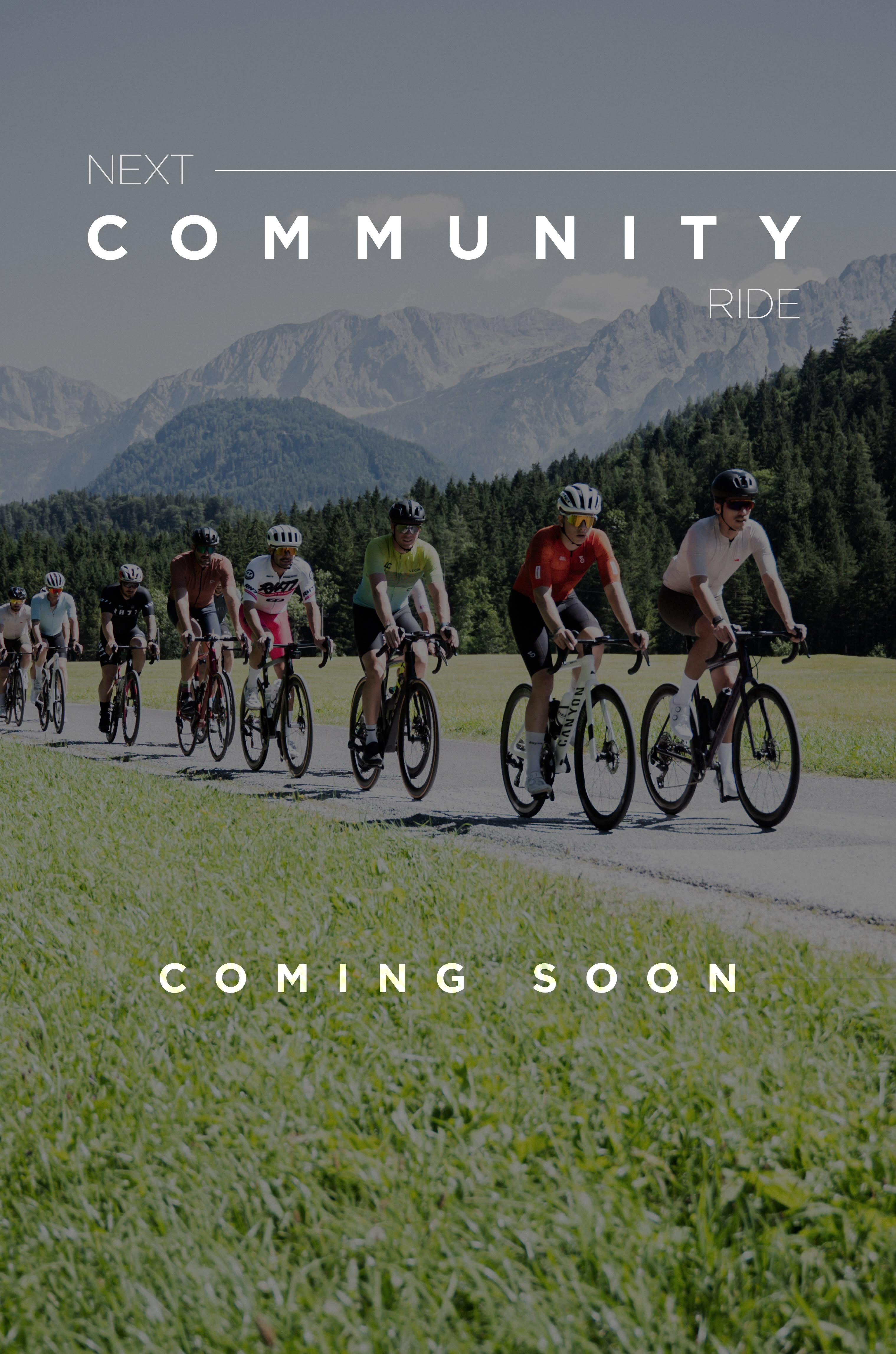
Elite athletes and everyday cyclists head out for a ride together - creating a money-can’t-buy moment for everyone taking part. Brand founder Marcel Hirscher also makes the most of the sunny afternoon in the Lammertal, joining the community for an endurance session. Riding almost unnoticed in the middle of the group is someone who operates in a league of his own: Toni Palzer. The ski mountaineering icon spent five years racing professionally on the WorldTour before returning to ski mountaineering last winter.
Anyone with the Vuelta and the Giro d’Italia in their legs still has plenty of breath left for an exciting conversation during the Community Ride. Toni Palzer talks about his performance challenge from Munich’s Marienplatz to the summit of the Zugspitze in 4:43:46 hours, the ultimate touring ski and his biggest sporting dream: the 2030 Olympic Games.
It’s really cool that something like this is happening. As an athlete, you depend to a certain extent on the community and on the people who follow your journey. This is an opportunity to meet them and give something back. Ride together, talk and simply have a great time. Life is about giving and taking.
From a logistical perspective, a day like this is no small undertaking. But when you have a strong partner by your side who makes it all happen, it makes the experience even more special.
Skiers are made in summer. Anyone who wants to perform well on skis in winter, whether in alpine skiing or ski mountaineering, has to put in the work during the summer. The great thing for us winter sport athletes is that we have so many options, from cycling to running and hiking.
The endurance boom is huge at the moment. When I ride my local routes at the weekend and see how many people are now out on road bikes, it’s really impressive. A Community Ride fits perfectly into that trend.
Cycling made me a much more structured and tougher athlete. It is undoubtedly one of the most professional endurance sports in the world, from performance to nutrition. I gained an incredible amount of expertise during that time, which I can now put to very good use. That toughness also comes from the fact that, as a professional cyclist, you may have up to 80 or 90 race days a year. A bike race can sometimes be less demanding physically, but mentally it is always extremely stressful because of your position in the peloton, the speed and the dangerous situations.
In a three-week stage race, you face 21 consecutive days of racing. In ski mountaineering, our longest stage races last four days. Of course, it is a different and much more intense type of effort. But after 21 days, four days feel extremely short. It changes your perspective.
You don’t want to let your team down. There are seven or eight riders involved, along with up to 30 staff members at every race, all of whom also benefit from the team’s success. That changes the way you deal with your own body. When you crash, you have to be seriously injured to get off the bike. You keep going with grazes and bruises, not just for yourself, but for the whole team. One for all, so to speak.
The freedom to decide for yourself where and when it happens. A competition is always tied to a specific date. You prepare for that one day, but in the end, you are only human. Some days are better than others. With a personal project, you define a time window and then decide when it is really going to happen. If I had got on the bike that morning and said, “I don’t feel good today,” we probably would have waited another week. When I do it, I want to give it one hundred percent.
The second aspect is how relatable it is. Professional sport is often extremely difficult to put into perspective. If someone finishes tenth on a stage to Alpe d’Huez, that may not look particularly spectacular to many people. Yet that same rider could probably win a major amateur race with one leg. People know Munich and the Zugspitze. Many cycle from Munich towards Garmisch, hike up the Zugspitze or take the cable car. That makes it much easier for them to understand what I achieved.


That was definitely the main goal of my summer. A lot of training went into it, and I treated it like an important competition. No one had done it before. Even if I had needed five and a half hours, many people probably still would have said, “That’s fast.”
But in the end, it comes down to my own standards. I wanted to stand at the top and be able to say, “Today, I completely emptied the tank.” Given my current level of fitness, I could not have gone any faster. As an athlete, you are always looking for moments like that. I get a lot of them from training because competition alone would not be enough for me.
No. I am not aiming to peak in summer. The Ötztaler and the Dolomitenmann are strong training goals, and for the mountain biking I still need to develop a few skills. My main performance goal remains the winter, especially with the Olympic Games in mind. Summer is when I build the foundation for that. Being at your peak all year round is impossible anyway.
I thought, “There’s something truly special on my feet right now.” I’ve been skiing on lightweight race skis for more than 20 years, but I had never experienced a ski that was this light while still offering such strong downhill performance.
Many companies can build a lightweight ski. The real difference is whether that lightweight ski also performs well on the descent. My ability to combine strong climbing and descending has shaped my best results. Having equipment that performs this well downhill is exactly what a ski mountaineer like me needs. In a race such as the Pierra Menta, you climb 10,000 vertical metres over four days and then ski the same 10,000 vertical metres back down. A good ski makes an enormous difference.
Because it simply performs so well on the descent. The idea that everything has to be ultra-light is outdated. You can compare it to cycling: one wheelset might be 200 grams lighter, but you still choose the more aerodynamic option because aerodynamics matter more than the weight saving, regardless of how much climbing a stage involves.
It is similar in ski mountaineering. It makes little difference whether a ski weighs 20 or 30 grams more if I have an efficient stride. The ski needs to stay in contact with the snow. That is why I use skins underneath rather than crampons. I would rather accept a few extra grams and gain more quality on the descent. It is not just about how the ski feels, but also about how relaxed I can stand on it and how much energy I can save.
The ski needs to be light so that people enjoy heading out on tour. It makes a huge difference whether you have one or two kilos on your feet. At the same time, it also needs to perform well on the descent.
Many people feel apprehensive about skiing downhill, especially if they are not particularly confident skiers or only started skiing later in life. The equipment should help take away that fear: a lightweight ski for the ascent that still delivers very good downhill performance.
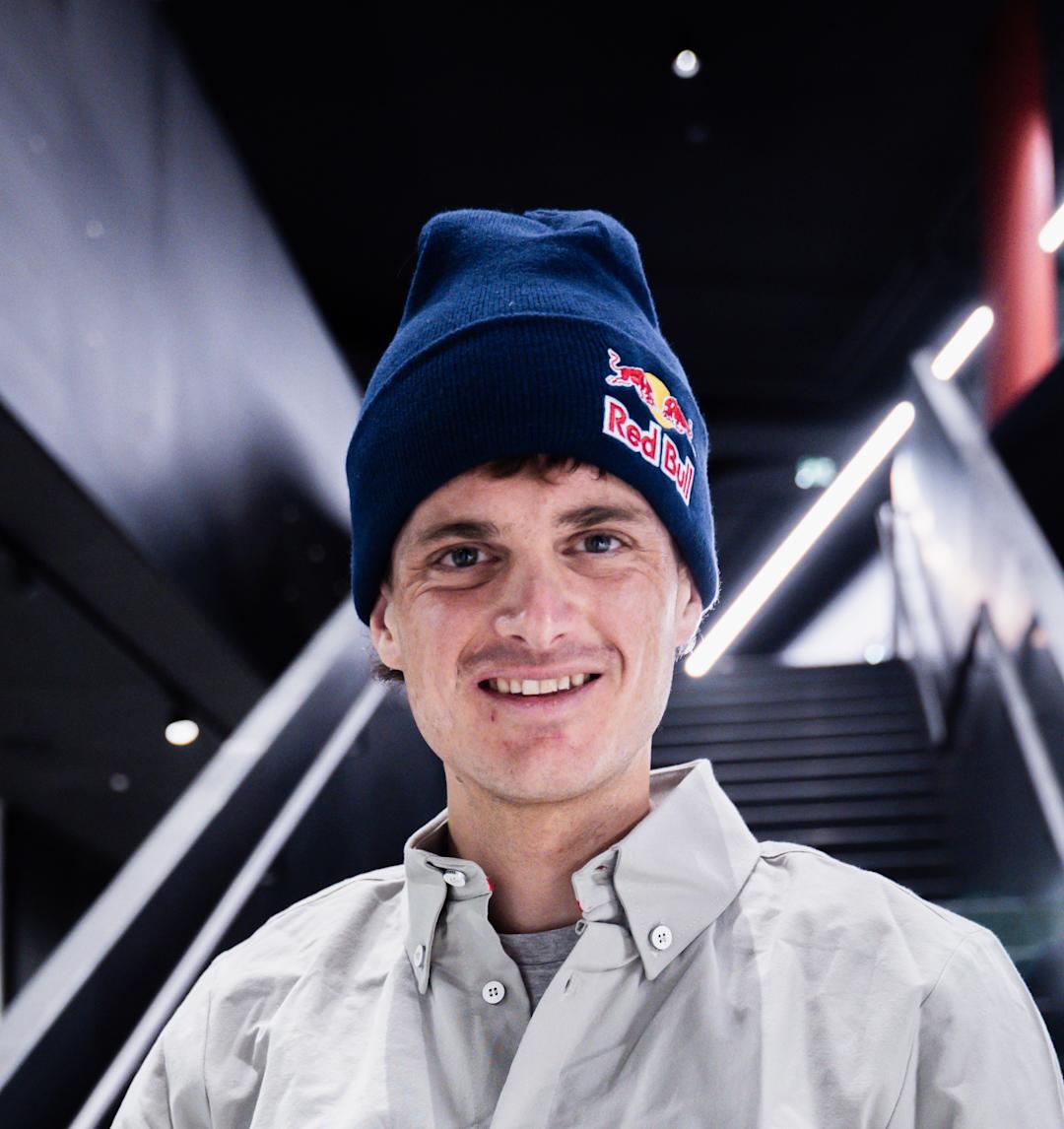
Yes, the 2030 Olympic Games are a genuine goal for me. I am 33 now—that is no secret. My biological clock is ticking too. Athletes are getting younger and younger, and I have to invest more to maintain my level or, ideally, improve it further. But I am also a complete realist. I believe I have a real chance of being competitive in ski mountaineering at the Olympic Games in four years.
Because I was no longer going to become the next superstar there. I could have continued working as a domestique, but that was no longer what I wanted. In ski mountaineering, on the other hand, I realistically see the possibility of still being competitive in 2030.
Maybe, in a way, it is also the thought of cake in the afternoon. But fundamentally, you need a bigger goal that drives you. For an athlete — and really for anyone — it is important to go through life with a clear goal in mind.
At some point, my priorities will also shift towards family and children, and I am looking forward to that. But as long as I am competitive and still enjoy it, I want to fully embrace life as an athlete. You keep moving forward. You have to keep moving forward.